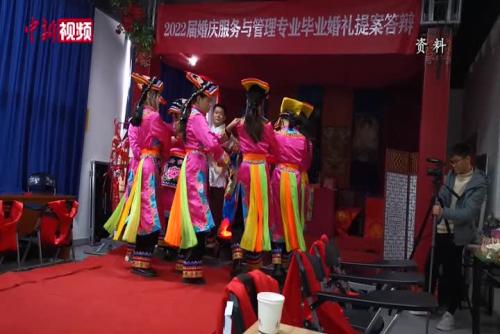
Yangko dancing is a popular folk performance art in rural northern China.
Requiring no stage, its performance styles are subdivided into "stilt" Yangko and "ground" Yangko.
Originating in the countryside, Yangko has a 1,000-year history in China.
According to an article by Wu Xilin, a writer during the Qing Dynasty (1644-1919 A.D.), Yangko was the music performed during the Lantern Festival in the Southern Song Dynasty (1127-1279 A.D.).
While transplanting rice seedlings, farmers chanted songs and stretched their bodies to relieve the pressures of labor. Later, unique dance moves were added to the chants, giving birth to various Yangko styles.
During the dance, people wear colorful costumes, hold umbrellas or handkerchiefs, and dance to the music of gongs, drums and suonas.
The dance moves vary from region to region. Northeast Yangko is powerful and mighty, with movements that imitate horse-riding and hunting, while northern Shaanxi Yangko is simple and natural, with steady steps and rich formational changes.
A Yangko troupe can include dozens or hundreds of dancers.
The dance has become an indispensable leisure-time activity for farmers.
During the traditional Spring and Lantern festivals, Chinese dancers celebrate with Yangko competitions and performances.
If you are interested, come and learn the "Yangko" dance!
责任编辑:【罗攀】
[网上传播视听节目许可证(0106168)] [京ICP证040655号] [京公网安备 11000002003042号] [京ICP备05004340号-1]
总机:86-10-87826688 违法和不良信息举报电话:15699788000
本网站所刊载信息,不代表中新社和中新网观点。
刊用本网站稿件,务经书面授权。
未经授权禁止转载、摘编、复制及建立镜像,违者将依法追究法律责任。
Copyright ©1999-2026 chinanews.com.
All Rights Reserved